
Breast Augmentation in Dallas, TX, with Dr. Yash
Refine, Restore, and Harmonize Your Curves
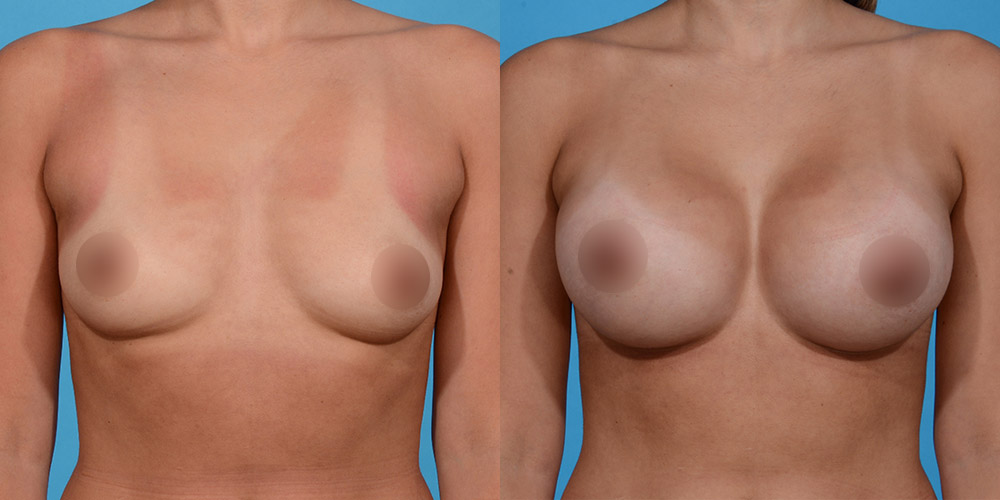
Breast augmentation is among the most popular plastic surgery procedures and has some of the highest patient-satisfaction ratings when performed by a skilled and experienced board-certified plastic surgeon. Breast augmentation uses implants to enhance the size and shape of your breasts and give you a more balanced and feminine figure. The procedure can add volume to naturally small breasts, restore volume that has been lost after pregnancy and breastfeeding or weight changes, and improve symmetry between the breasts. Breast augmentation surgery, also known as augmentation mammoplasty, places breast implants beneath the breast tissue or the chest muscles to add breast volume, and each plan begins with a careful review of your breast anatomy.
Dr. Yash Avashia has the medical skill and expertise, along with an exceptional understanding of body aesthetics, to create subtly beautiful and natural-looking results with breast augmentation — results that are tailored to your unique proportions and lifestyle. Many women who undergo breast augmentation want a natural appearance, and that goal guides how breast size and breast shape are planned.
To learn more about how breast augmentation in Dallas might enhance your body and boost your self-esteem, contact Dr. Yash Plastic Surgery or call our office at (469) 249-9615 to schedule a consultation.
Quick Links
How Might I Benefit from Breast Augmentation?
There’s a good reason breast augmentation is such a popular cosmetic surgery option. The enhancements from the procedure can:
- Increase breast fullness and projection
- Improve the shape of your breasts
- Restore lost volume due to pregnancy, weight reduction, or aging
- Create a more rounded breast shape
- Make your breasts more symmetrical
- Improve the overall balance and proportions of your figure
- Increase your confidence and self-esteem
- Help you look your best in clothing and swimwear and expand your clothing options
As an elective cosmetic surgery procedure, breast augmentation surgery is among the most requested cosmetic procedures for women, and many hope that a more balanced breast shape will support their self-image.
For all of the benefits of breast augmentation, it won’t correct significant sagging. If your breasts sag, with your nipples positioned below the crease under your breasts, a breast lift is the better solution. A breast lift alone will raise the position of your breasts and can improve their shape and firmness for a younger look. A breast lift in combination with breast augmentation can raise, reshape, and add volume to your breasts for a more comprehensive enhancement. A breast lift removes excess skin and raises the nipple position, while breast implants add volume, so some women choose both to address sagging breasts. Combining surgical procedures can sometimes reduce the number of operations, but it also affects recovery, so Dr. Yash will explain the benefits and risks of each plan.
How Is Breast Augmentation Customized for Each Patient?
Breast augmentation is a highly customized procedure, which can be tailored to your body and your preferences with a number of choices and variables. Dr. Yash will advise you on the decisions about these options, which include:
Breast Implant types
The two main implant types are silicone and saline. Both types are enclosed in a flexible outer shell made of silicone. Both are FDA approved for breast augmentation in women who meet the age requirements, and a breast implant device is selected to suit your breast anatomy, breast size, and goals.
Silicone implants
Silicone implants are filled with a thick, stable silicone gel that has a density and consistency that approximates natural breast tissue. Many women prefer the natural feel of silicone implants. The gel in a silicone implant is thick enough to stay in place for some time, even if the outer shell leaks or ruptures. When a silicone gel implant ruptures, it must be removed or replaced within a year or two to prevent the silicone from spreading into the surrounding tissue. “Gummy bear” implants use an even thicker, form-stable silicone gel that does not change shape or move into surrounding tissue in the event of a shell rupture. Many modern silicone gel implants use cohesive silicone gel, a viscous silicone gel that holds together and keeps its shape. A silicone breast implant rupture may cause no obvious symptoms, so silicone breast implant ruptures are typically found with breast imaging such as ultrasound or magnetic resonance imaging.
Saline implants
Saline implants are filled with a sterile saline (saltwater) solution. While saline implants do not have quite the same natural feel as silicone implants, they present no health risk if the shell leaks or ruptures. In the event of an implant rupture, the saline solution is naturally absorbed and processed by the body. The rupture is easily detected, too, as the implant deflates and the breast reverts to its pre-augmentation volume. When this happens, it may be a cosmetic concern, and it may be desirable to replace the implant, but it is not a health issue. The Ideal implant is a newer saline option. It has internal compartments so that a leak in one will not lead to deflation of the entire implant. The sections within the implant also give it more stability and a more natural feel. Saline breast implants have an empty shell that is filled with sterile saline solution once it is positioned, which can allow a smaller incision than a pre-filled silicone breast implant.
Breast Implant Profile
Implant profile determines the projection of your breasts. While size measures the overall volume of the implant filling, profile measures its thickness or depth. Two implants of the same size can have very different profiles if one is wider and flatter and the other is narrower and taller.Round breast implants add fullness evenly, and round implants can rotate without changing the look of the breast, while shaped implants taper toward the top and must stay in position to preserve their contour. Textured breast implants have a rougher surface that was designed to help the implant stay in place.
Breast Implant Size
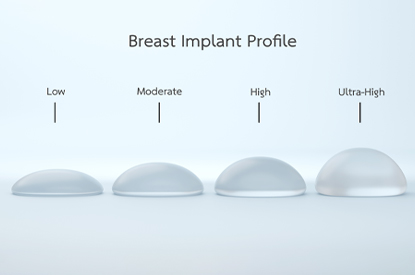
Implant size is the overall volume of the implant. The larger the implant size, the more dramatic and noticeable your augmentation will be. The choice of implant size depends on your anatomy and the change you want to achieve. Dr. Yash follows a tissue-based approach to help you decide on the optimal implant size for your body. He will balance your desired outcome with your anatomy to provide an implant that fits your body frame appropriately. Breast size goals, chest wall width, and the amount of breast tissue you have all influence which breast implants are realistic, and Dr. Yash can show you how different breast implants look on your frame.
Implant Placement
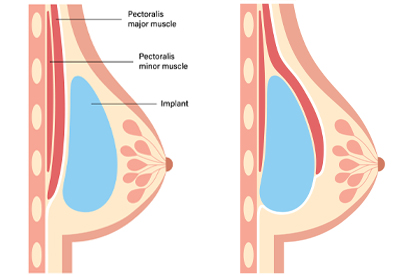
Breast implants can be placed below the breast tissue but above the chest wall muscles (subglandular placement) or behind the chest wall muscles (subpectoral placement). The choice mostly depends on your anatomy, though your lifestyle can also be a factor. For example, if you are a devoted runner, subpectoral placement might be preferable, whereas if you are passionate about bodybuilding, subglandular placement might be a better choice. Dr. Yash prefers the submuscular approach and performs this in the majority of his breast augmentations. During breast implant insertion, a breast pocket is created either beneath the pectoralis major muscle, often called the pectoral muscle, or above it, behind the glandular breast tissue. Placement beneath the pectoral muscle adds soft tissue coverage that may help breast implants look natural when there is less breast tissue, though soreness in the chest muscles may last longer afterward.
Incision Placement
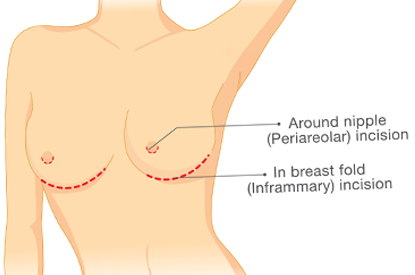
The surgery for breast augmentation involves making incisions to insert the implant. The choice of incision placement is primarily determined by the type of implant (silicone or saline) and the implant placement (subglandular or subpectoral).
- An inframammary fold incision is made along the crease below the breast.
- A periareolar incision is made in a half-circle along the lower edge of the areola, the dark area surrounding the nipple.
Scar tissue forms as part of normal healing, and an incision placed in the inframammary fold typically fades over time.
Am I a Good Candidate for Breast Augmentation in Dallas, TX?
The best candidates for breast augmentation:
- Are in good general health
- Have realistic expectations for the results of the procedure
- Don’t smoke, or are willing to avoid tobacco and nicotine use for a period before and after surgery
- Are not pregnant or breastfeeding
- Are prepared to rest and follow all post-operative instructions during recovery
In your consultation with Dr. Yash, he will review your medical history, listen to your goals for the procedure, and determine if breast augmentation is a good solution for you. He values transparency and will have an open discussion with you about your breast enhancement options.
What Can I Expect Before, During, and After My Dallas Breast Augmentation Procedure?
Before
Dr. Yash is a partner at the Dallas Plastic Surgery Institute and will perform your breast augmentation in the Institute’s state-of-the-art surgery center. The Institute is a leading facility for aesthetic surgery in Dallas and among the best in the country. On surgery day, you will check in and meet with Dr. Yash and your anesthesia provider. You will then be carefully anesthetized—either with general anesthesia or intravenous sedation combined with local anesthesia—before being taken into the operating room with a nurse chaperone.
During
Dr. Yash will perform the surgery according to the plan discussed during your consultation. After making the incisions—either under the breasts or around the lower edge of the areolas—he will insert the breast implants into pockets, either under the chest muscle or over the muscle, beneath the breast tissue. Once the implants are properly positioned, he will close the incisions.
After
Breast augmentation is performed as an outpatient procedure. Once you are alert again after your anesthesia, a friend or family member can drive you home. You can then return home to begin the recovery phase. Dr. Yash will provide you with a full list of post-operative instructions for you to follow and will be available if you have any immediate questions or issues. As with all surgical procedures, your anesthesia team will review your health history before breast augmentation surgery, and breast implants are placed through small incisions that Dr. Yash plans with you in advance.
What Can I Expect in Breast Augmentation Recovery?
Your breasts will be wrapped in dressings and a supportive garment to promote healing, reduce swelling, and keep the implants in position. You can expect some swelling and bruising during the first few days after surgery, which can be managed with pain medication. You will be advised to rest for the first week and avoid any strenuous activity, including lifting, for the first two weeks. After that, following Dr. Yash’s instructions based on your progress, you can gradually resume more activity, building up to your normal exercise and activity level by about six weeks after surgery. Some breast pain is common at first and typically eases as healing progresses, and soreness in the pectoral muscle may last longer if breast implants were placed beneath the muscle. Most women return to light activity soon after receiving breast implants, though strenuous exercise waits until your surgeon approves.
Because you won’t be able to lift anything initially, you’ll need to arrange for help at home during the first week or two. This might include assistance with cooking, shopping, taking out the trash, or caring for young children.
Most patients can return to office-type work after about a week. If your work involves strenuous activity, you may need to adjust your duties or take additional time off.
Some swelling may linger beyond the first week, and it can take time for your breasts to settle into their new shape. Final results will be visible after a few weeks and will continue to improve over the months following your surgery. Scars will gradually fade and typically match your skin tone after about a year.Recovery from breast augmentation surgery is gradual, and breast augmentation results continue to refine as the breast implants settle, so patience is part of the process.
Breast Implant Safety and Possible Complications
Like any cosmetic surgery, breast implant surgery carries risks, and understanding them helps breast implant patients make a confident decision about breast augmentation, and a plastic surgeon should explain each risk before you commit. As with all surgical procedures, possible complications include infection, bleeding, implant rupture, capsular contracture, and the need for a second operation or implant removal.
Capsular Contracture and Scar Tissue
Your body naturally forms a thin layer of scar tissue around every breast implant. In some women, this scar tissue tightens around the implant, a complication called capsular contracture, which can cause firmness, a change in breast shape, and breast pain. Capsular contracture may be treated with revision surgery, in which the scar tissue is released or the implants removed and replaced.
Implant Rupture and Follow-Up Imaging
A saline breast implant that ruptures deflates, so the change is usually noticeable. A silicone breast implant rupture may cause no obvious symptoms, which is why periodic imaging is commonly recommended for women with silicone gel implants. A breast implant rupture should always be evaluated, and a damaged implant is typically addressed with implant removal or replacement.
Breast Implant Illness and BIA-ALCL
Some women report symptoms such as fatigue, joint pain, and brain fog after receiving breast implants, a pattern often called breast implant illness. This pattern is not a formal medical diagnosis, and researchers continue to study whether implants play a role, so share any health concerns with Dr. Yash. A rare condition called breast implant associated anaplastic large cell lymphoma (BIA-ALCL) has also been linked to textured devices. BIA-ALCL is a lymphoma of the immune system.
Schedule Your Dallas Breast Augmentation Consultation Today
Contact us today or speak with our helpful front desk at (469) 249-9615 to schedule a consultation and learn how Dallas breast augmentation surgeon Dr. Yash can help you achieve the body you’ve always wanted. He will listen carefully to understand your goals and provide his expert recommendation on the best approach to meet your needs. Dr. Yash provides exceptional care to patients from Dallas, TX, and the surrounding areas of Texas.
Ready to Begin Your Aesthetic Journey?
Honesty and integrity are the cornerstones of Dr. Yash’s practice. He believes in educating every patient on which plan offers the most value for their specific anatomy and goals and recommending only what genuinely makes sense, never simply what’s possible. Whether a traditional facelift, a deep plane facelift, or even a non-surgical solution is right for you, Dr. Yash will guide you with candor, skill, and care.
FAQs About Breast Augmentation in Dallas, TX
Minimizing contamination of the breast pocket is a fundamental goal in breast augmentation. The Keller Funnel helps reduce the implant’s contact with the surrounding skin during placement, ensuring safe and precise insertion into the breast pocket. Dr. Yash uses the Keller Funnel for all of his breast augmentations. Because a silicone breast implant arrives already filled with silicone gel, the funnel helps guide the device through a smaller incision.
Dr. Yash will begin by understanding your goals for breast augmentation. He will take extra time to fully understand your desired outcome and may ask you to bring goal photos to the consultation. He will then evaluate your chest and breast anatomy. Everyone’s anatomy is different, and in most cases, one breast differs from the other. Based on your anatomy and goals, he will determine a series of implant sizes and select the best one in the operating room based on the final fit and aesthetic result.
Dr. Yash’s office will send you instructions on how to submit standardized photographs for him to analyze prior to your virtual consultation. In addition, take some time to think about your goals for breast augmentation and select 2–3 goal photos to share with Dr. Yash.
Internal Bra or Galaflex Mesh are useful tools in revision or secondary breast surgery. Patients who have had prior breast augmentation and now experience a secondary deformity may benefit from the use of this mesh to reinforce and support the lower and lateral borders of the breast. This helps the implants maintain the correct position on the chest wall, resulting in improved medial and upper breast fullness.
The recovery after breast augmentation is generally predictable. Patients may experience mild pain and soreness for the first few days up to a week after surgery. Dr. Yash uses a multi-modal pain management regimen, which includes a combination of intraoperative injections and postoperative muscle relaxants and pain medications. Most patients are comfortable with mild activity within the first week of surgery. Bruising and swelling are expected after any surgery; bruising typically improves by the end of the first week, while swelling gradually subsides over the following weeks.
Nipple sensation should generally remain after breast augmentation. In certain cases, such as revision breast surgery or large-volume augmentation, nipple sensation may change temporarily or, in rare cases, permanently. During your consultation, Dr. Yash will review the risks associated with surgery and take the time to address any concerns specific to your procedure.
Patients who undergo a primary (first) breast augmentation do not need drains. Dr. Yash uses drains only in select cases of secondary or revision breast augmentation. If you do have drainage tubes after breast augmentation, your surgeon will tell you when to return to have them removed.
You should plan on being out of work for a minimum of 3–4 days up to 1 week after surgery.
For patients who want to achieve a natural yet enhanced result, Dr. Yash follows a tissue-based approach. This method involves selecting breast implants that safely and appropriately match the anatomic parameters of a patient’s breasts. It has been shown to minimize secondary complications and provide a long-lasting, natural-looking result.
Dr. Yash is highly trained in autologous fat grafting to the breast and performs it either in conjunction with implant-based breast augmentation (composite breast augmentation) or alone (breast augmentation with autologous fat grafting). Fat is harvested through liposuction from various areas of your body—such as the abdomen, back, thighs, or arms—then processed and reinjected into the breast.
When composite breast augmentation is performed, the breast implant provides the primary volume, while fat grafting enhances specific areas to help camouflage pre-existing asymmetries. Fat is commonly injected medially to enhance cleavage or superiorly for more upper-pole fullness. For patients who prefer not to have breast implants, fat grafting can safely provide mild to moderate volume augmentation of the breasts. Fat transfer breast augmentation uses fat tissue from your own body, and a fat graft typically produces a smaller change in breast size than breast implants, so Dr. Yash can explain whether implants, a fat graft, or a combination is the better choice for your goals.
You should have a clear understanding of your goals. Goal photos, whether from patients with prior breast augmentation or non-patient photographs, can help convey your objectives. It’s important to clearly explain your goals to Dr. Yash during your consultation, as this discussion helps him determine the appropriate implant size for you.
Whether your breast augmentation involves the inframammary approach (crease approach) or the periareolar approach (around the areola), the incision is short. Any time an incision is made, a scar will result. Dr. Yash understands this inevitable process and takes great care to meticulously close his incisions, aiming for the best possible scar that heals in an almost imperceptible fashion. He also provides a scar package with all his breast augmentations, which includes a specialized scar gel and 2–3 post-operative laser treatments to help the scar fade and soften. The inframammary fold is the natural crease where the breast meets the chest wall, which helps conceal the scar.
Women with breast implants can safely get screening mammograms. Today, special mammography techniques allow us to adequately image the breast tissue without interference by the breast implant. Tell your imaging center about your breast implants beforehand so that additional views can be used, and share any family history with Dr. Yash before surgery. Breast imaging may also include ultrasound or magnetic resonance imaging to evaluate an implant.
You should wear your post-surgical bra for the first week after surgery. Afterward, you may transition to a sports bra for up to six weeks. During this period, avoid wearing an underwire bra, as it may irritate your incision.
Yes, breast augmentation is performed under general anesthesia.
Breast implants are not lifetime devices. Depending on the age at which you undergo breast augmentation, you may need future surgery. This is not necessarily a complication, but rather a normal part of the breast augmentation process. As breast tissue naturally changes with age relative to the static implant, patients may require secondary surgery to help maintain shape and size. These secondary procedures may be needed 10–15 years after the initial breast augmentation. Implant removal or replacement may also be recommended if there is a rupture, capsular contracture, or a change in breast size, and implants removed because of a complication can often be replaced during the same surgery.
Dr. Yash uses dissolvable sutures for all breast augmentations, so no sutures need to be removed.
Both silicone and saline devices are FDA approved for breast augmentation in women who meet the age requirements. Every breast implant device has its own size, shape, and surface, and Dr. Yash can explain how these breast implants differ so you can choose the device that suits your goals.
Silicone breast implants are filled with silicone gel, while saline breast implants are filled with sterile saline solution during surgery. Many women find that silicone devices feel closer to natural breast tissue, and saline-filled devices can be adjusted slightly in volume during surgery. Dr. Yash can show you how each type looks and feels so you can choose the breast implants that best suit your frame and goals. Many modern silicone devices use cohesive silicone gel, which is designed to hold its shape.
Breast implants add breast volume, but breast implants do not lift sagging breasts on their own. If your nipples sit below the breast crease, a breast lift with augmentation may be recommended, which raises the breast and restores fullness. A breast lift can also refine the shape of augmented breasts that have changed after pregnancy or weight loss.
Fat transfer breast augmentation uses liposuction to harvest fat tissue, then places the purified fat graft in the breasts. A fat graft uses your own tissue, but fat transfer typically produces a smaller change in breast size than breast implants, and part of the fat graft may not survive. Because fat tissue is living tissue, results depend on how much of the transferred fat remains. A fat graft is not a substitute for implants when a larger change is the goal, and Dr. Yash can explain whether implants, a fat graft, or a combination is the better choice for your goals.
Breast augmentation, also called augmentation mammoplasty, enhances the size and shape of healthy breasts, while breast reconstruction rebuilds the breast after a mastectomy, an injury, or a congenital difference. Reconstructive breast surgery may use breast implants, your own tissue, or both, and the plan depends on your medical history. Reconstruction falls under plastic and reconstructive surgery, and it is a separate process from elective augmentation. A consultation with a plastic surgeon trained in plastic and reconstructive surgery can clarify which path fits your situation.
Breast implant illness is a term some women use for symptoms such as fatigue, joint pain, and brain fog after receiving implants. It is not a formal medical diagnosis, and research is ongoing, so please share any symptoms with your surgeon. It is separate from breast implant associated anaplastic large cell lymphoma, a rare lymphoma linked to textured devices that is not breast cancer.
Breast implants can make breast imaging more complex, but women with implants should continue routine screening. If you have a personal or family history of breast cancer, please share it with Dr. Yash before breast augmentation surgery so that your screening plan can be coordinated.
Preparing well for plastic surgery can help you undergo breast augmentation with confidence. Before breast implant surgery, your plastic surgeon will give specific instructions about medications, nicotine, and the night before surgery, and you should arrange a ride home because it is an outpatient procedure. Like any cosmetic surgery, breast augmentation goes more smoothly when you plan ahead for time off and support at home.
Like other surgical procedures, healing varies from person to person. You will notice a change in breast size right away, but swelling can hide your final breast shape for several weeks. Breast augmentation results continue to refine as the implants settle, and many patients see their final look within a few months after breast augmentation surgery.
After breast augmentation surgery, regular check-ups help your plastic surgeon monitor your breast implants, because breast implants are not lifetime devices, and periodic breast imaging is recommended for women with silicone gel implants. Women with textured devices should also know the signs of breast implant associated anaplastic large cell lymphoma, such as sudden swelling or fluid around the implant, and report them promptly. Contact our office if you notice a change in firmness, shape, or discomfort, because those changes may signal capsular contracture or an implant rupture.
Significant weight loss can reduce breast volume and change breast size, and pregnancy and breastfeeding can alter breast shape. If you are planning weight loss, or have recently lost weight, discuss it with your plastic surgeon so that your breast augmentation surgery can be planned accordingly. A stable weight helps protect your results, and a breast lift can refine the shape of augmented breasts that have changed over time.
Choose a plastic surgeon who is board certified, who performs breast augmentation regularly, and who is willing to show you realistic breast augmentation results. An accredited surgical facility is also an important part of safe cosmetic surgery, and a plastic surgeon with training in plastic and reconstructive surgery can explain the benefits and limits of each option.
Breast augmentation surgery, or augmentation mammoplasty, is commonly performed, and like any plastic surgery, it carries risks. A surgeon trained in plastic and reconstructive surgery can explain how breast implants fit your health history. Following your instructions and attending your follow-up visits help support a safe breast augmentation, as with other surgical procedures.
Many women undergo breast augmentation surgery before having children, but pregnancy and breastfeeding can change breast shape and breast volume over time. If you plan to have children, discuss your timeline with Dr. Yash so that your breast implants and any future breast lift can be planned with those changes in mind.
Most patients feel up to leaving the house within a day or two after breast augmentation. Plan to rest at home at first, avoid strenuous activity, and follow the instructions Dr. Yash gives you for your recovery.
Dr. Yash uses dissolvable sutures, so nothing needs to be removed. If your incisions are closed with stitches that do need removal, your surgeon will probably remove them about one week after breast augmentation surgery.
Your breasts may seem to sit high on the chest at first after breast augmentation. This is normal, as they will settle into their optimal position over the next several weeks. Please contact our office if you have questions about how your breasts are settling.
If you experience warmth and redness in your breast or develop a fever after breast augmentation, you should contact your surgeon, as these could be signs of infection. Prompt attention helps your surgeon decide on the right next step.
The average cost of breast augmentation starts at $3,900, but the final estimate can vary based on your treatment plan, implant types, surgeon’s fee, facility fees, and anesthesia fees. A consultation with a plastic surgeon is the best way to discuss the specific costs associated with breast augmentation and to receive a personalized estimate.
The cost of breast augmentation can vary significantly based on the surgeon’s experience, the complexity of the surgery, and the geographic location of the practice. Because every plan is different, a personalized estimate from your plastic surgeon is essential.
Patients should expect to pay additional fees for anesthesia and facility costs on top of the surgeon’s fee for breast augmentation. Our team can explain how these fees apply to your plan during your consultation.
Patients should expect to pay additional fees for anesthesia and facility costs on top of the surgeon’s fee for breast augmentation. Our team can explain how these fees apply to your plan during your consultation.